Limited Edition Labels: How Brands Manage Multiple Packaging Designs
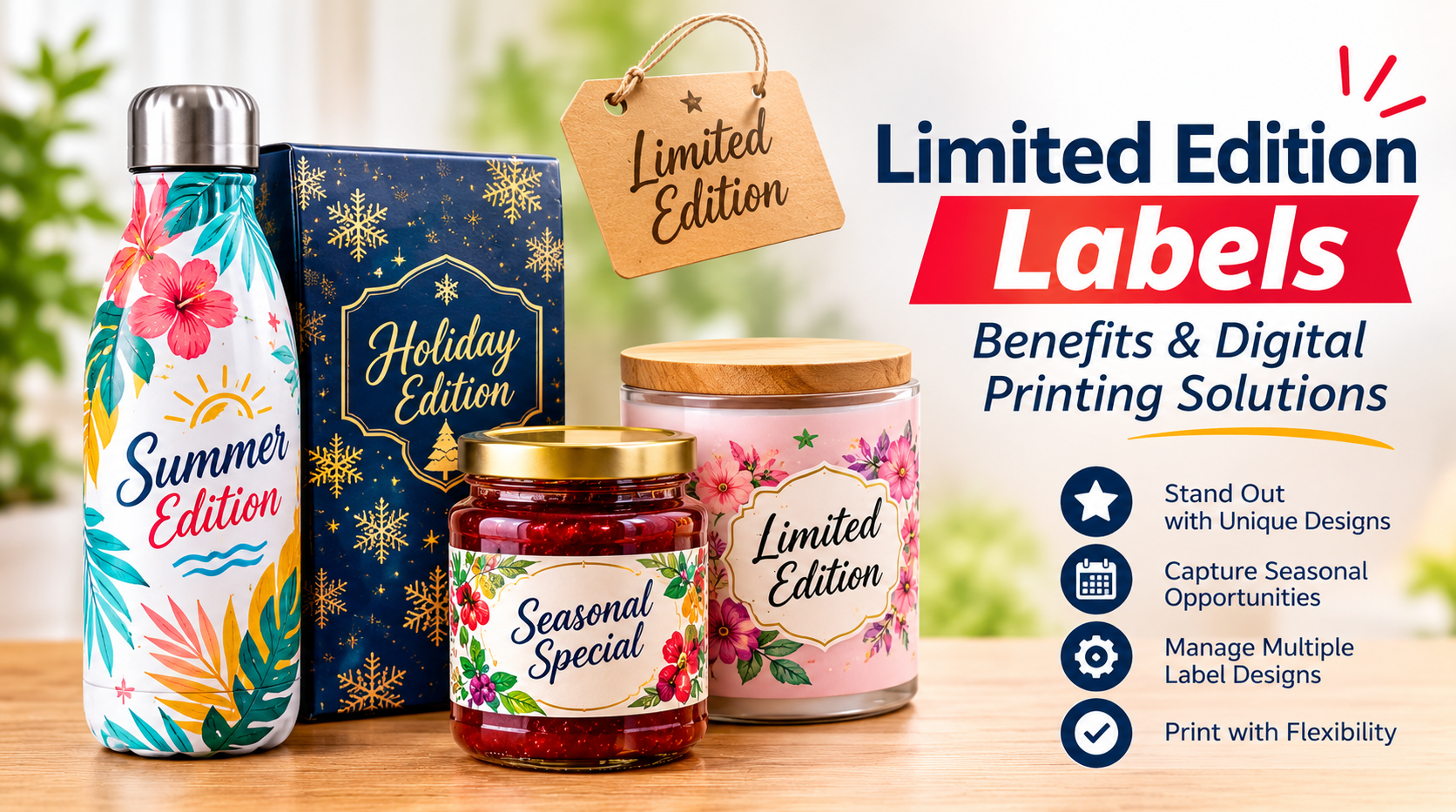
Packaging has evolved beyond basic product identification to become an important part of brand differentiation and product presentation. Introducing exclusive collections, seasonal products, and promotional releases, brands often require multiple label designs within shorter production cycles. However, conventional printing methods can involve setup costs and minimum order quantities that make smaller batches of different designs less economical.
This creates challenges in managing production costs, label inventory, and changing packaging requirements. Digital label printing addresses these limitations by enabling shorter print runs, quicker artwork changes, and greater flexibility in design variations without compromising print quality. Print quality depends on the printing equipment, materials, and production specifications. This post explores the role of limited-edition labels, the challenges of large print runs, and how brands can manage multiple packaging designs through flexible printing solutions.
Understanding Limited edition Packaging
Limited edition packaging involves manufacturing product labels and packaging components according to specific production requirements rather than standard, recurring specifications. From a label printing perspective, each version may have distinct artwork files, color profiles, variable data, substrate requirements, and finishing specifications. These variations are managed within a defined production workflow to ensure accurate artwork reproduction, dimensional compatibility, and print consistency.
Here is how most brands benefit from limited edition packaging:
-
Strengthen Brand Differentiation:
Limited edition packaging gives brands an opportunity to distinguish specific product releases from their regular offerings. Distinctive visual elements, exclusive artwork, and customized label variations help establish a recognizable identity for special collections, making products more noticeable in competitive retail environments.
-
Capitalize on Seasonal Market Opportunities:
Seasonal product packaging allows businesses to align their offerings with occasions such as holidays, festivals, and promotional events. Brands can introduce limited-time designs to support seasonal campaigns, appeal to occasion-driven purchasing needs, and generate interest in existing products without changing their core formulations.
-
Build Consumer Interest and Purchase Intent:
Exclusive product presentations can create a sense of novelty and perceived value among consumers. When customers encounter a special product edition, its distinct appearance and limited availability can encourage product exploration, increase purchase interest, and strengthen their connection with the brand.
-
Evaluate Market Preferences and Design Performance:
Introducing different packaging variations provides brands with an opportunity to assess how consumers respond to specific visual elements, color combinations, and product presentations. Feedback and sales performance across different releases can help businesses identify effective design approaches and make more informed decisions for future packaging development.
How to Manage Multiple Label Designs Efficiently
The following practices help businesses streamline label production while maintaining consistency across different product versions.
-
Maintain Brand Consistency:
Ensure that all label variations retain essential brand elements, including logos, typography, colors, and product identification details. Graphics, illustrations, and campaign-specific messaging can be modified to suit individual releases. This approach helps businesses introduce multiple label designs without compromising brand recognition.
-
Standardization Artwork Files:
Prepare separate, clearly identified artwork files for each design variation. Maintain consistent specifications for label dimensions, bleed areas, image resolution, color modes, and font requirements. Reviewing digital proofs before production helps verify artwork accuracy and minimizes errors before printing custom product labels.
-
Plan Label Quantities:
Estimate production quantities according to product demand, campaign duration, and distribution requirements. Instead of ordering equal quantities for every variation, assess the expected demand for individual designs. Small batch packaging helps businesses align label production with actual requirements and manage inventory more effectively.
-
Verify Product Information:
Ensure every label variation contains accurate product descriptions, ingredients, batch details, barcodes, safety instructions, and other applicable regulatory information. Review text placement, readability, and compliance requirements before approving artwork. This helps maintain information accuracy across different custom packaging labels.
-
Select Suitable Materials and Finishes:
Consider packaging surfaces, moisture exposure, temperature fluctuations, abrasion, and adhesive compatibility when selecting label materials. Finishing options such as lamination and UV varnish can provide additional surface protection or enhance visual presentation. Appropriate material selection helps maintain label durability under intended application conditions.
-
Choose the Right Printing Method:
Evaluate production quantities, artwork variations, color requirements, and turnaround expectations before selecting a printing process. Digital label printing supports short run label printing by eliminating conventional plate requirements and accommodating frequent artwork changes. Flexible label printing also helps businesses manage different designs within their packaging requirements.
Industries That Benefit from Limited edition Labels
Limited edition labels help businesses introduce product variations on different occasions. The below discussed industries use them to refresh packaging and respond to changing consumer preferences.
-
Food and Beverage Industry:
Food manufacturers use Limited edition labels on seasonal chocolates, Halloween confectionery, Thanksgiving gift boxes, holiday beverages, and summer drink varieties. Craft breweries and specialty food brands also apply them to flavors and collaboration releases. Digital label printing allows manufacturers to produce different artwork versions in smaller quantities, helping them coordinate label orders with seasonal launches and retail promotions.
-
Cosmetics and Personal Care Industry:
For beauty brands, limited edition labels provide a way to distinguish holiday gift sets, Valentine’s Day collections, skincare ranges, and celebrity collaborations. Products such as perfumes, lotions, and makeup can feature exclusive graphics, metallic finishes, or specialty materials. These design variations allow brands to introduce distinctive packaging for special collections while retaining consistent product information and brand identification.
-
Consumer Goods Industry:
Household product manufacturers can use different label designs for candles, holiday home fragrances, Halloween-themed air fresheners, and promotional cleaning product bundles. Short run packaging labels make it practical to update graphics, fragrance names, and campaign messaging without replacing the entire packaging range. This helps businesses coordinate label procurement with production schedules, limit obsolete inventory, and introduce timely retail promotions.
-
Pet Care Industry:
Pet food and accessory brands can apply limited edition labels to holiday treat packs, food flavors, birthday collections, and special adoption-event promotions. Separate label versions help distinguish temporary product varieties while retaining consistent ingredient, feeding, and product information. Brands can also use these releases to introduce new product variations and evaluate consumer response before expanding their offerings.
Print Custom Labels for Seasonal and Special Releases
Planning a seasonal launch, promotional campaign, or limited-edition product collection? Performance Label Company (PLCTX) offers digital label printing for businesses that need flexible production quantities and multiple artwork variations. Its capabilities include custom shapes, different label materials, adhesives, and finishing options such as lamination and UV varnish.
Whether you need limited edition labels, seasonal product variations, or short run packaging labels, PLCTX can help match your label specifications to the intended application. Share your artwork, material preferences, design variations, and estimated quantities with the team to discuss your requirements and request a custom quote.
Frequently Asked Questions
- Can multiple label designs be included in a single print order?
Yes. Multiple artwork variations can often be included in one print order, depending on the printer’s production capabilities and order specifications. This allows brands to consolidate different label designs for seasonal products, promotional releases, or product variants rather than managing each design as a separate large-volume order. Confirm how the printer handles artwork changes, quantities, and setup requirements for each variation before placing the order.
- How do brands ensure limited edition labels work with automatic label applicators?
Labels intended for automatic application must match the equipment’s specifications, including roll direction, core size, outside roll diameter, and label spacing. The label dimensions, liner, and dispensing orientation should also be compatible with the applicator. Confirming these details before printing helps prevent feeding problems, application delays, and unnecessary production interruptions.
- Can QR codes and barcodes be included on Limited edition labels?
Yes. Brands can incorporate QR codes and barcodes to support product identification, promotional campaigns, traceability, or access to digital product information. Each variation should undergo scanning and readability checks before production to ensure the codes function correctly across different label designs.
- What should brand review before approving a short-run label order?
Before approving production, brands should check the final artwork, product information, label dimensions, die-cut shape, adhesive requirements, and roll specifications. Reviewing production proof helps identify layout or printing issues before the complete order is manufactured.
- Can businesses reorder a successful limited edition label design?
Yes. Retaining approved artwork files and production specifications makes it easier to reproduce a successful design. Keeping records of the material, dimensions, adhesive, finish, and print settings also helps maintain consistency when a seasonal product or promotional collection returns.